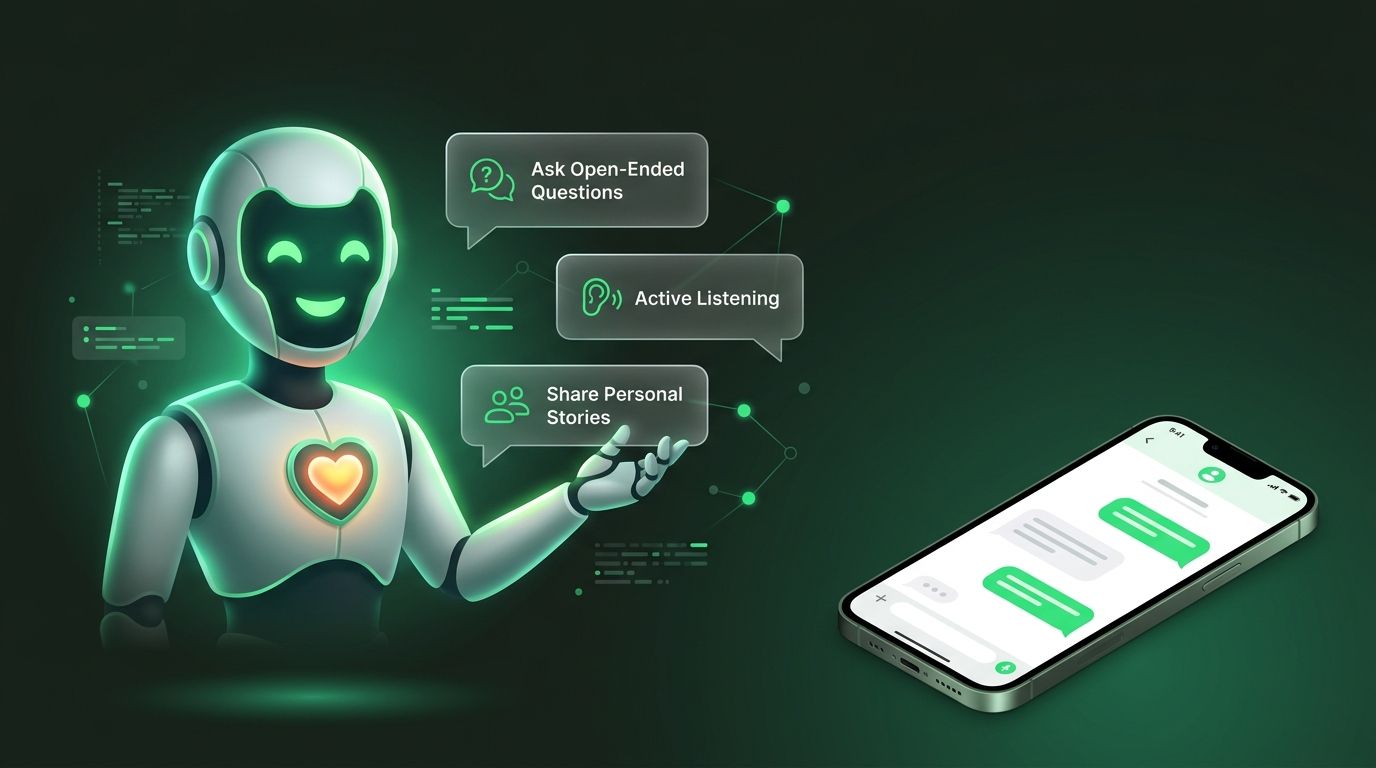
The modern dating landscape has undergone a fundamental restructuring through artificial intelligence. By September 2026, the normalization of algorithmic romance assistance has reached critical mass. Match's Singles in America study now documents that 26% of U.S. singles actively integrate AI into their dating workflows—a staggering 333% year-over-year increase. This penetration extends beyond the swipe economy into committed partnerships, with the same research indicating 44% of married Americans now consult AI tools for relationship advice and conflict resolution. The AI dating coach market has matured into an $850 million industry, capturing over $200 million in fresh venture investment in 2026 alone as the technology shifts from novelty to essential romantic infrastructure.
Yet this rapid adoption exists in tension with profound skepticism. A 2026 Guardian survey reveals 62% of respondents remain wary of AI-facilitated conversations, exposing a trust gap that defines the current marketplace. Platform policies reflect this ambivalence: Hinge has codified a "coach, not write" stance, positioning native AI features such as Convo Starters as ideation engines rather than ghostwriters. Users increasingly view AI-guided dating as both indispensable cognitive scaffolding and ethically fraught territory, particularly as tools evolve from simple text generators into agentic systems that interview users, analyze photo arrays, and orchestrate entire relationship workflows.
The tactical reality is that AI dating coaches now cluster into distinct functional categories: real-time conversation optimizers (Wingman, RizzAgent AI), text-based reply generators (RIZZ, Winggg, RizzGPT), profile and photo auditors (ROAST, YourMove AI), simulation and practice environments (Blush), and relationship maintenance systems (Flamme, Meeno). The question is no longer whether these tools exist, but how to deploy them without violating platform Terms of Service, compromising privacy, or sacrificing authenticity. This comprehensive 2026 review examines the full ecosystem—including emerging voice-coaching capabilities and no-swipe matchmaking platforms—analyzing specific tools, cost economics against human alternatives, generational adoption patterns, gendered usage differences, platform-specific ban risks for Tinder, Hinge, and Bumble, and privacy protocols for screenshot workflows.
What Do AI Dating Coaches Actually Do?
An AI dating coach is a software platform leveraging machine learning, natural language processing, and computer vision to assist across the full romantic lifecycle—from profile optimization through long-term relationship maintenance. Unlike 2024-era iterations that simply generated text, 2026's sophisticated systems emphasize skill-building over automation, functioning as conversational tutors rather than ghostwriters—a philosophy now echoed by Hinge's "coach, not write" framework and the American Psychological Association's guidelines for healthy AI usage.
Modern platforms sort into six distinct taxonomies:
- Reply & Opener Generators: RIZZ, Winggg, and RizzGPT analyze conversation screenshots or profile details to suggest contextual openers and reply variants, specifically targeting the dominant user pain point: "what do I say next?" These tools emphasize teaching users why specific approaches work rather than replacing user voice entirely.
- Profile & Photo Optimizers: ROAST, YourMove AI, and Deina employ computer vision to audit photo arrays, ranking images by predicted engagement rates, detecting visual red flags, and rewriting bios to eliminate clichés. Photo auditing has emerged as the highest-demand feature among users aged 50+.
- Real-Time Voice & Keyboard Coaching: RizzAgent AI (launched Q2 2026) and Wingman offer ambient coaching during live conversations—RizzAgent through voice-in-ear suggestions during in-person dates, Wingman through iOS keyboard extensions that analyze message timing and tone during active chats.
- Simulation & Practice Environments: Blush provides first-date rehearsal modes and approach-anxiety desensitization through AI-generated conversational partners, allowing users to test openers in low-stakes scenarios.
- Agentic Matchmaking: Fate and emerging "no-swipe" platforms conduct comprehensive pre-interviews, analyzing stated values and communication patterns to predict compatibility before presenting curated matches rather than infinite swiping options.
- Relationship Maintenance Systems: Flamme and Meeno have pivoted beyond matching into couples coaching, offering conflict resolution scripts, difficult conversation drafting, and long-term compatibility monitoring for established partnerships.
Functional Capabilities Breakdown
Their technical functionalities now span eight critical domains:
- Agentic Onboarding: Leading 2026 platforms conduct 15–30 minute structured interviews before suggesting matches, acting as digital matchmakers rather than algorithmic accessories.
- Visual Intelligence: Photo ranking algorithms analyze facial expressions, background complexity, and swipe-rate prediction models to optimize array ordering across Tinder, Hinge, and Bumble.
- Contextual Memory: Tools like Meeno, Fate, and Flamme retain longitudinal conversation history across sessions, offering continuity that mimics ongoing human coaching relationships rather than resetting after each query.
- Screenshot Processing Workflows: RIZZ, Lainie, and Deina require image uploads for analysis, utilizing OCR (optical character recognition) to extract text while—privacy-dependent—discarding or encrypting the visual data.
- Live Conversation Interfaces: Wingman and RizzAgent provide real-time tactical guidance on timing, tone calibration, and conversational pivots during active messaging or in-person interactions.
- Reply Refinement: Systems analyze conversation threads to suggest multiple response vectors, helping users decode ambiguous messages and avoid impulsive emotional errors.
- Safety Screening: Responding to 2026 European survey data showing 68% demand for safety features, advanced coaches integrate catfishing detection and toxic pattern recognition before users invest emotional energy.
- Behavioral Analytics: Longitudinal tracking identifies recurring pitfalls—excessive self-deprecation, premature escalation, or conversational monopolization—providing data-driven feedback loops impossible for human coaches to replicate at scale.
2026 AI Dating Coach Comparison Matrix
The 2026 market features a fragmented field ranging from free tiers to premium subscriptions nearing $50 per month. The following comprehensive matrix addresses pricing, core functionalities, platform compatibility, privacy architecture, and adherence to the "coach, not write" ethical standard:
| AI Dating Coach | 2026 Pricing Tier | Primary Category | Key Differentiator | Platform Compatibility | Privacy Rating | Coach vs. Ghostwrite Alignment |
|---|---|---|---|---|---|---|
| RIZZ | Freemium ($0–$7.99/week) | Reply Generator | Screenshot analysis for Tinder/Hinge; viral Gen Z adoption | iOS, Android (screenshot upload) | Moderate (3.5/5) | Coach (user edits required) |
| Winggg | $4.99–$9.99/week | Reply Generator | Focus on natural-sounding openers; anti-detection algorithms | Web, iOS | Moderate (3.6/5) | Coach |
| RizzGPT | Freemium ($0–$5.99/week) | Reply Generator | Generative training on high-conversion dating datasets | Web, iOS, Android | Moderate (3.4/5) | Risk of Ghostwrite if copied verbatim |
| Wingman | Freemium ($0–$7.99/week) | Real-Time Coach | iOS keyboard extension; live message suggestions | iOS only (Keyboard integration) | High (4.2/5) | Coach |
| RizzAgent AI | $12.99–$29.99/week | Voice Coach | In-ear real-time coaching during dates; ambient computing | Wearables, iOS | High (4.0/5) | Coach |
| YourMove AI | $3.99–$14.99/month | Profile Optimizer | Efficiency metrics; low price point | Cross-platform web dashboard | High (4.5/5) | Coach |
| ROAST | $9.99–$19.99/month | Photo Auditor | Photography-specific AI; highest swipe-rate prediction accuracy | iOS, Android | Moderate (3.7/5) | Coach |
| Lainie | $7.99/month | Reply Generator | Script generation and conversation flow management | iOS, Android | Moderate (3.8/5) | Session-only processing |
| Fate | $39.99/month (Premium) | Agentic Matchmaking | No-swipe interview-to-match workflow; quality curation | Standalone platform | High (4.6/5) | Coach with longitudinal memory |
| Blush | $3.99–$12.99/week | Simulation/Practice | First-date practice; anxiety reduction scenarios | iOS, Android | Moderate (3.6/5) | Practice environment |
| Deina | $5.99/month (Freemium available) | Profile Auditor | Profile scoring; photo ranking; date ranking post-activity | Cross-platform | Moderate (3.7/5) | Coach |
| Meeno | $3.99–$9.99/month | Relationship Maintenance | Long-term compatibility tracking; difficult text drafting | Web, iOS | High (4.4/5) | Coach with memory |
| Flamme | Freemium ($0–$9.99/month) | Couples Coach | Conflict resolution scripts; established relationship focus | iOS, Android | High (4.3/5) | Coach with memory |
Platform Compatibility & Integration Architecture
Most 2026 AI dating coaches operate as standalone adjuncts rather than direct API integrations—a distinction critical for Terms of Service compliance. Wingman offers native iOS keyboard extensions functioning within Tinder, Hinge, and Bumble interfaces. RizzAgent AI requires wearable integration (Apple Watch or proprietary earbuds) for real-time voice coaching during in-person dates. RIZZ, Winggg, ROAST, and RizzGPT require manual screenshot uploads or text pasting. Fate operates as a standalone matchmaking ecosystem requiring migration from traditional swipe apps. Users must verify iOS 16+ or Android 12+ requirements for keyboard functionality and confirm whether processing occurs locally or via cloud servers.
Cost Analysis: Human vs. AI vs. ChatGPT in 2026
The democratization of dating advice hinges on transparent total cost of ownership. While human coaching maintains premium positioning, AI alternatives have fragmented into distinct economic tiers:
2026 Price Benchmarks
- Human Dating Coaches: Certified relationship coaches and matchmakers command $150 to $500+ per hour, with comprehensive three-to-six-month packages ranging from $3,000 to $15,000+. Seminars and group coaching reduce this to $500–$2,000 but sacrifice personalization.
- Dedicated AI Dating Apps: Freemium tiers dominate the market. Premium subscriptions range from $3.99 per month (budget tools like YourMove AI) to $12.99 per week (premium reply generators like RIZZ), with high-end agentic platforms like Fate charging $39.99 per month and voice-coaching wearables like RizzAgent AI reaching $29.99 per week. Annualized spending typically falls between $48 and $600 for standard tiers.
- DIY ChatGPT: Free-tier access handles basic prompt tasks; ChatGPT Plus at $20 per month (or $240 annually) unlocks GPT-4o capabilities for unlimited profile drafts, opener generation, and conversation analysis at zero marginal cost per query.
Total Cost of Ownership & ROI Calculations
For users seeking three to six months of guidance, AI coaching delivers an ROI of 400% to 800% compared to human coaching when measuring cost per date secured. A $200 annual AI subscription yielding 12 dates costs approximately $16 per date, compared to $250 to $400 per date using human coaching services. However, DIY ChatGPT requires substantial time investment in prompt engineering and manual data entry, whereas dedicated apps offer one-tap screenshot analysis, keyboard integration, and algorithms trained specifically on romantic datasets.
Tier Selection Decision Matrix
- Choose DIY ChatGPT if: You are highly cost-conscious, possess intermediate prompt-engineering skills, and do not require real-time keyboard support, voice coaching, or memory continuity across sessions.
- Choose Paid AI Apps if: You require real-time keyboard integration (Wingman), privacy-conscious screenshot processing (YourMove AI), platform-specific optimization (RIZZ, ROAST), voice coaching during dates (RizzAgent AI), or ongoing coaching memory (Fate, Meeno, Flamme).
- Choose Human Coaches if: You are navigating attachment trauma, personality disorders, severe social anxiety, or complex pre-date anxiety requiring empathetic, psychologically nuanced intervention beyond CBT frameworks.
DIY ChatGPT Prompt Engineering for Dating Success
For users optimizing costs through the DIY approach, these specialized prompts replicate paid tool functionality:
- The Anti-Cliché Profile Auditor: "Analyze this dating profile bio [paste text]. Identify three specific clichés or generic phrases. Rewrite it to showcase unique personality markers while maintaining [witty/confident/playful] tone. Keep under 150 characters and include one conversation hook."
- The Contextual Opener Generator: "Based on this match's profile details [paste specifics], generate five personalized opening messages under 25 words each that reference specific visual or textual details. Avoid generic compliments. Include one humorous option, one sincere option, and one that references a shared interest."
- The Conversation Decoder: "Analyze this message thread [paste]. Explain the subtext and emotional tone of the last message. Identify any yellow flags. Suggest three response options: one playful, one sincere, and one that progresses toward meeting in person. Include timing recommendations."
- The Voice Calibration Prompt: "I am a [age/gender] seeking [demographic] on [Hinge/Tinder/Bumble]. My natural communication style is [formal/casual/sarcastic/dry]. Generate three responses to the prompt [insert prompt] that authentically reflect this voice while inviting follow-up questions."
- The Difficult Conversation Drafter: "I need to communicate [sensitive boundary/apology/request for space] to someone I've been seeing for [timeframe]. Draft a message that is honest but non-confrontational, maintains dignity for both parties, and opens the door for dialogue rather than shutdown."
When Paid Tools Justify the Investment
Upgrade from ChatGPT to specialized apps when you require: real-time keyboard integration (impossible with ChatGPT alone); privacy-protected screenshot processing without manual copying; platform-specific algorithms trained exclusively on dating conversation datasets rather than general internet text; or ambient voice coaching during in-person interactions.
Generational Usage Patterns: Gen Z vs. Millennials vs. Boomers
2026 adoption data reveals distinct generational psychologies regarding AI romantic assistance:
Gen Z (Ages 18–27): The Authenticity Paradox
Despite digital nativity, 60% to 62% of Gen Z daters express explicit discomfort with AI-generated messages, fearing inauthenticity and "algorithmic catfishing." However, this demographic paradoxically shows the highest utilization of AI for profile and photo optimization while rejecting automated conversation replacement. They gravitate toward Blush for practice scenarios and RIZZ for photo auditing, but insist on heavy personalization of any AI-generated text. Their primary pain point is "opener anxiety" balanced against authenticity concerns.
Millennials (Ages 28–43): Efficiency Optimizers
This cohort demonstrates the highest comfort levels with AI-assisted dating, viewing technology as pragmatic efficiency tools rather than ethical compromises. They drive subscription revenue for standalone coaching apps and show highest retention rates for premium tiers, particularly YourMove AI and Meeno. Millennials prioritize time-economy—reducing message deliberation from 20 minutes to under 5 minutes—and value longitudinal memory features that track relationship progression across months.
Boomers & Dating Over 50: The Fastest-Growing Segment
Users aged 50+ represent the fastest-growing adoption category for AI coaching in 2026. Unlike Gen Z, this cohort reports higher satisfaction with AI-assisted communication due to decreased familiarity with digital dating norms and "translation" needs. They utilize ROAST and YourMove AI heavily for photo selection and bio writing, and show highest engagement with Deina for profile scoring. Their primary use case involves understanding modern app mechanics and decoding ambiguous digital communication patterns.
Gender-Specific Tool Experiences: Women vs. Men
Usage data reveals asymmetric adoption patterns and distinct pain points across gender lines:
Men (Ages 20–35): Tone Calibration & Uncertainty Reduction
Data indicates disproportionate adoption among men in this bracket, who cite "uncertainty about tone" and "fear of saying the wrong thing" as primary pain points. This cohort shows highest usage of real-time keyboard tools like Wingman and reply generators like Winggg. They utilize AI primarily for initial outreach and "what to say next" coaching, with 34% reporting decreased approach anxiety within three weeks of use.
Women: Safety Screening & Opener Anxiety
On Bumble's women-first platform, female users leverage AI to overcome "opener anxiety"—crafting confident initial messages that maintain interest without appearing overeager. Additionally, women show 40% higher utilization of AI safety screening features, using tools to identify catfishing red flags, analyze photo authenticity, and detect toxic communication patterns before emotional investment. They prefer tools with high privacy ratings (YourMove AI, Meeno) that offer screenshot redaction and zero-retention policies.
Platform-Specific Playbooks & TOS Risk Matrices
2026 AI dating coaches must navigate distinct platform policies and detection algorithms. Each app demands specific compliance frameworks:
Tinder: Automation Detection & Volume Limits
Tinder's 2026 algorithms specifically target generic AI-generated spam and mass-automation tools. Risks include:
- High Risk: API scraping tools, automated swiping bots, "undetectable" mass-messaging services
- Moderate Risk: Copy-pasting identical AI-generated openers to multiple matches (triggers spam filters)
- Compliant: Manual screenshot upload tools (RIZZ, ROAST), keyboard extensions with user-initiated sends
Best practice: Never copy-paste AI outputs verbatim; always personalize with match-specific details to avoid "algorithmic uniformity" detection.
Hinge: The "Coach, Not Write" Standard
Hinge has established the industry's clearest AI policy framework. Their native Convo Starters feature provides three tailored opener suggestions per match, reflecting official sanction for AI-assisted ideation. Third-party tools comply when they function as coaches rather than ghostwriters. Violations occur when users employ AI to automate message sending or generate responses without human editing. The platform actively monitors for generic phrase patterns (e.g., "I couldn't help but notice," "That's fascinating—tell me more") and flags accounts showing identical message structures.
Bumble: Women-First Mechanics & Timing Constraints
Bumble's 24-hour messaging window creates unique anxiety points. AI tools address:
- For women: Confident opener generation that avoids "overthinking paralysis" while maintaining authentic voice
- For men: Response optimization within the expiration window, including timezone-aware follow-up timing
- For both: Conversation recovery tactics when matches expire and require rematching
Bumble's TOS explicitly prohibits automated message sending but permits "assistant" tools that require manual user confirmation before transmission.
Screenshot Redaction & Privacy Workflows
For platforms requiring screenshot uploads (RIZZ, Winggg, ROAST), implement these privacy workflows:
- Pre-Upload Redaction: Use native iOS/Android markup tools to blur match faces, names, and location data before uploading to third-party servers
- OCR-Only Processing: Prefer tools that extract text via OCR and immediately discard images (YourMove AI, high-tier Meeno subscriptions)
- Zero-Retention Verification: Confirm providers offer "zero-retention" modes or automatic 24-hour deletion windows for uploaded screenshots
- Local Processing: Where available, enable on-device processing to prevent cloud transmission of conversation data
AI for Relationship Communication (Not Just Dating)
The most significant 2026 market expansion involves post-match relationship coaching. Data indicates that 44% of married Americans now use AI for ongoing relationship advice, representing evolution from dating assistance to long-term partnership maintenance.
Difficult Conversation Drafting
Tools like Meeno and Flamme specialize in high-stakes communication:
- Boundary Setting: Drafting texts that establish emotional or physical boundaries without triggering defensive responses
- Apology Calibration: Crafting authentic apologies that acknowledge harm without over-apologizing or appearing disingenuous
- Need Expression: Translating vague dissatisfaction into specific, actionable requests using non-violent communication frameworks
- Conflict De-escalation: Real-time tone checking during heated exchanges to prevent relationship-damaging impulsive messages
Couples Coaching Applications
Established partners utilize AI for:
- Attachment Style Navigation: Personalized guidance for anxious or avoidant partners to communicate needs without triggering defensive cycles
- Intimacy Scheduling: Contextual activity suggestions based on shared interests, budget constraints, and relationship stage
- Long-term Compatibility Monitoring: Analysis of communication patterns over months to identify growing misalignments before they become critical, leveraging memory continuity unavailable in session-only tools
Post-Dating Phase Utility
The lifecycle approach—from profile optimization through relationship maintenance—positions AI dating coaches as comprehensive romantic infrastructure rather than mere matching tools.
Emerging Technologies: Wearables & No-Swipe Matchmaking
Beyond text-based coaching, 2026 innovation clusters around ambient computing and agentic matchmaking:
Wearable Integration & Real-Time Date Coaching
RizzAgent AI and similar platforms now integrate with Apple Watch and proprietary earbuds to provide in-ear coaching during live dates—suggesting conversation pivots, warning against monopolizing dialogue, or prompting questions based on earlier match profile data. This "ambient computing" approach requires careful privacy considerations but offers unprecedented real-time support for in-person social dynamics.
No-Swipe AI Matchmaking
Platforms like Fate and emergent 2026 competitors have eliminated the swipe interface entirely. Instead, users undergo comprehensive AI interviews analyzing values, communication patterns, and psychological compatibility. The algorithm then presents curated matches rather than infinite options, showing measurable improvements in match-to-date conversion rates (15% to 25% higher than unassisted dating) and reported relationship satisfaction.
Success Metrics & Verifiable Outcomes
Beyond cost savings, AI coaches deliver measurable romantic outcomes:
- Reply Rate Optimization: Messages refined by AI demonstrate 20% to 30% higher reply rates compared to unassisted equivalents, attributed to contextual personalization that avoids generic greetings
- Match-to-Date Conversion: Agentic systems show 15% to 25% higher conversion rates from match to first date compared to 8% to 12% for unassisted usage
- Anxiety Reduction: 28% of users report significant reduction in "message anxiety" within 3–4 weeks of practice with simulation tools like Blush
- Photo Performance: AI-audited photo arrays show measurable improvements in lead-image swipe rates, particularly for users over 50
- Time Efficiency: Reduction in message deliberation time from 20+ minutes to under 5 minutes, enabling busy professionals to maintain active dating pipelines
- Safety Outcomes: AI screening reduces time wasted on fraudulent matches by approximately 40% through early catfishing detection
Ethics, Authenticity & Mental Health Considerations
The proliferation of AI dating assistance has triggered intense debate regarding authenticity and psychological wellbeing:
The "Coach, Not Write" Ethical Standard
Hinge's 2026 policy framing provides the definitive benchmark: AI should coach, not write. This separates augmentation from simulation. Using AI to brainstorm openers, analyze photo performance, or rehearse difficult conversations falls within ethical norms. Presenting an AI-generated persona as your spontaneous self constitutes deception. The healthiest implementation treats AI as a sparring partner, not a substitute.
Disclosure Etiquette
Emerging 2026 norms suggest transparency expectations vary by relationship stage. Current consensus favors disclosure when AI substantially shapes communication style, particularly before transitioning to phone calls or in-person meetings. Best practice suggests mentioning AI assistance casually by the third message exchange or before the first date.
Mental Health Warnings
The American Psychological Association (APA) issued 2026 guidance warning that over-reliance on AI dating tools may contribute to social skill erosion and increased loneliness. When users bypass the cognitive work of interpreting social cues, they risk atrophying essential emotional intelligence capacities. To mitigate risk, limit AI to specific bottlenecks rather than full conversation management, and discontinue use if spontaneous communication confidence decreases.
Who Should and Shouldn't Use AI Dating Coaches?
Ideal Candidates
- Digital Dating Novices: Users new to app ecosystems requiring structural guidance on mechanics and conventions
- Professionals with Time Constraints: Those seeking efficiency gains and real-time keyboard support
- Anxiety-Managed Users: Individuals with mild social anxiety utilizing AI as training wheels while building independent confidence
- Dating Over 50: Users re-entering the market needing translation of modern digital norms
- Strategic Optimizers: Users committed to the rephrasing strategy—using AI for ideation while manually editing outputs
- Couples Seeking Maintenance: Partners utilizing low-cost tools for routine conflict navigation and intimacy scheduling
Users Who Should Avoid or Limit Usage
- Authenticity Purists: Individuals viewing any algorithmic assistance as deceptive
- Psychological Complexity Cases: Those with attachment trauma or personality disorders requiring human therapeutic intervention
- Dependency-Prone Individuals: Users with histories of behavioral addiction who risk replacing rather than supplementing social skills
- High-Privacy Requirements: Individuals uncomfortable with third-party processing of romantic conversations should avoid screenshot-based tools in favor of zero-retention web dashboards
Final Verdict: Are AI Dating Coaches Worth It in 2026?
AI dating coaches represent valuable but bounded tools in the current landscape. They deliver strong ROI for photo auditing, profile optimization, overcoming initial message anxiety, and navigating high-stakes relationship conversations. The shift from automation to coaching—exemplified by agentic systems, privacy-first design, and Hinge's mainstream "coach, not write" policy—addresses authenticity criticisms while maintaining accessibility at price points 90% lower than human alternatives.
However, they remain inadequate substitutes for human emotional intelligence, psychological depth, and genuine connection chemistry. The 26% adoption rate among singles and 44% usage among married Americans confirms their permanence in romantic culture, but the 62% skepticism rate cautions against uncritical dependency.
For optimal results, employ AI dating coaches as tactical supplements rather than strategic replacements. Use them to optimize digital presentation and bridge initial communication gaps, but prioritize developing unassisted social capabilities. Maintain strict privacy hygiene through screenshot redaction, zero-retention policy verification, and local processing where available. When used with transparency, critical oversight, and commitment to personal growth, they legitimately reduce barriers to connection. When used to fabricate personas or bypass emotional labor, they risk reinforcing the isolation they promise to cure.
The 2026 consensus: AI dating coaches are worth the investment for specific applications—particularly for new daters, busy professionals, those over 50, couples seeking maintenance coaching, and anyone committed to the rephrasing strategy—but require disciplined use to avoid dependency, preserve privacy, and maintain the authentic human presence that ultimately drives romantic success.
Frequently Asked Questions
Is using an AI dating coach considered cheating or deceptive?
Ethical boundaries depend on usage intensity and transparency. Using AI for photo auditing, profile optimization, or brainstorming conversation ideas generally falls within accepted 2026 norms. However, presenting AI-generated content as entirely spontaneous self-expression without eventual disclosure may violate emerging authenticity standards as relationships progress. The industry standard centers on autonomy: are you using AI to enhance your existing personality, or to simulate a false one? Disclosure by the third message exchange or before the first date is emerging as best practice.
Can I get banned from Tinder or Hinge for using AI dating coaches?
If you use AI as a coach rather than an automated bot, the risk is minimal. Keyboard extensions and manual screenshot tools generally comply with Terms of Service because they do not automate swiping or messaging. However, tools promising "undetectable" mass automation, API scraping, or automated message sending violate platform rules and can trigger immediate bans. Hinge specifically monitors for copy-paste generic phrases, while Tinder targets mass-messaging patterns. Always manually edit and send your own messages to stay safely within TOS.
How can I make AI-generated messages sound authentic and avoid detection?
Employ the rephrasing strategy: use AI suggestions as conceptual starting points, then manually edit for your specific vocabulary patterns, humor style, and emotional register. Insert personal details the AI cannot know, adjust formality levels to match your natural speech, and vary sentence structures to avoid algorithmic uniformity. Avoid generic compliments that trigger dating app AI-detection algorithms.
Do AI dating coaches store my conversation history forever?
Data retention policies vary by provider. Premium tools like Fate, Meeno, and Flamme use memory continuity to improve advice over time, meaning they retain session history until you delete your account. Others like Wingman and RIZZ largely process requests session-by-session. Before subscribing, review the provider's data retention policy, confirm whether they offer zero-retention modes or automatic deletion windows, and verify GDPR/CCPA deletion rights.
Can AI dating coaches help with relationship maintenance, or just getting dates?
2026 data shows 44% of married Americans use AI for ongoing relationship advice. Tools like Flamme and Meeno offer conflict resolution scripts, difficult conversation drafting, attachment style guidance, and long-term compatibility monitoring. This represents a significant evolution from earlier tools focused solely on matching.
Which AI dating coach works best with Tinder, Hinge, and Bumble?
Wingman offers native iOS keyboard extensions integrating seamlessly with all three platforms (iPhone only). RIZZ and Winggg work across platforms via screenshot upload. ROAST specializes in Tinder photo optimization, while YourMove AI provides cross-platform consistency via web dashboards. For privacy-focused users, Meeno offers web-based coaching without app integration. Always verify that your chosen tool's integration method complies with each platform's specific Terms of Service.
Can I use ChatGPT instead of paying for a dedicated AI dating coach?
Yes, many users default to ChatGPT for free dating assistance. However, dedicated apps offer advantages: real-time keyboard integration (impossible with ChatGPT), screenshot analysis without manual copying, memory continuity across sessions, and algorithms trained specifically on dating datasets. Consider paid tools when you need privacy-protected screenshot processing or platform-specific optimization beyond general GPT-4o capabilities.
What are the mental health risks of using AI dating coaches?
The APA warns that excessive reliance may contribute to social skill atrophy and increased loneliness by removing cognitive processing required for genuine connection. Users may develop "optimization anxiety"—stress when interactions proceed unpredictably. To mitigate risks, limit AI use to specific bottlenecks rather than entire conversations, and maintain regular unassisted social interactions to preserve spontaneous communication skills.